
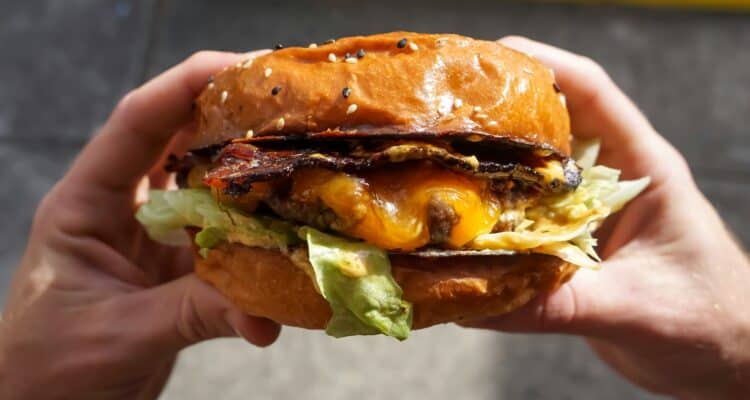

The government has decided to remove deep-fried and high-sugar foods from UK school menus.
These are the first changes to the school food standards in a decade, since revising those plans was delayed due to COVID-19.
Parent polling revealed that most parents are concerned about what their kids are eating at school, causing the government to act.
According to a 2025 study, in Northern Ireland, over one in four children and young people are living overweight or obese.
With one out of three children also leaving primary school overweight or obese, the Health Minister, Sharon Hogson, has said that the government is “determined to reduce the child obesity epidemic.”
Children in NI, aged 11 to 18 years old, consume roughly three portions of fruit and vegetables daily on average. Only 9% meet the ‘five a day’ recommendation.
The Health Minister says that “offering more nutritious meals at school is a great way of ensuring they eat healthier food.”
There are plans to limit high-fat, high salt, and sugary foods and start incorporating more fruit, wholegrains, and vegetables into school meals.
Unhealthy ‘to-go’ foods such as pizza and sausage rolls will no longer be allowed to be offered. Deep-fried food will be banned completely, and desserts are to be limited to once a week.
Katherine Jenner, Executive Director of the Obesity Health Alliance, says that “schools should be a place that actively supports children’s health. Strengthening school food standards, so children can enjoy affordable, tasty, and nutritious meals, is a vital and welcome step.”
She believes that “action cannot stop at the school gates. It is needed across the wider food environment to truly give every child the best start in life.”
Some healthy sample meals that are being considered are spaghetti bolognese, Mexican-style burritos, cottage pie, chicken with rice and peas, and roasted chickpea vegetable and mozzarella wraps.
A nine-week consultation on the proposals has also been announced.
Secondary schools will have a phased approach to some of the changes and will have time to develop recipes, update their menus, and train the staff.
The government is dedicated to developing a strong enforcement system to make sure that schools are following the new protocol.
It would include schools being monitored for compliance, publishing their menus and food policies online, and an assigned lead governor to be responsible for the school’s food.
With 50% of parents all over the UK being unaware of what their child is being fed, parents, pupils and communities can start holding schools accountable.
More details regarding the food plans alongside the enforcement will be announced in September 2027.
The Department for Education says that these latest changes mean that millions of children will get healthier and more nutritious meals in school every day.
Education Secretary, Bridget Phillipson, considers this “the most ambitious overhaul of school food in a generation, and it is long overdue.”
These changes are supported by food campaigners, charities, and nutritional experts, including Bite Back, Chefs in Schools, and even Jamie Oliver.
Chefs in Schools is a charity that aims to improve the quality of school meals across the UK and has partnered with a different charity called the School Food Project.
Naomi Duncan, Chief Executive at Chefs in Schools, has expressed her approval of this new initiative. “We are pleased to see the first update to school food standards in over a decade, and a commitment to monitoring that means these measures will have real impact.”
The Chair of the School Food People, Brad Pearce, has said: “The School Food People welcome the Government’s review of the School Food Standards.” He said that the charity will collaborate with the government so that a system that focuses on children’s health and well-being can be supported.
