
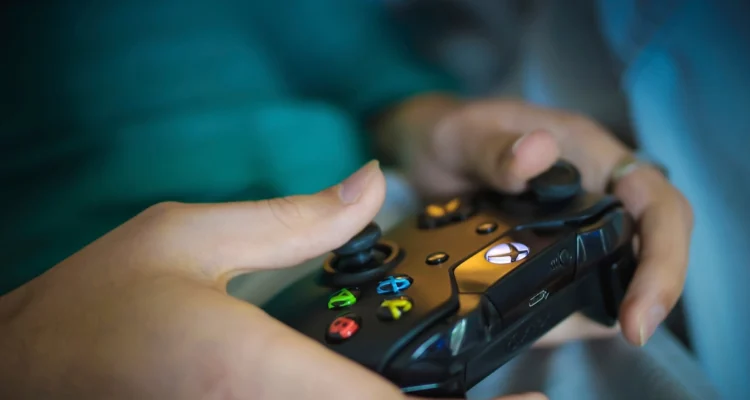
While the gaming world has long been attributed to younger generations being labelled as lazy, unproductive and lacking the adventurous nature of children, it is not simply a negative hobby that keeps kids hidden away in their rooms. Although many of the aforementioned qualities are more prevalent in the newer generations, video games have been shown to set children up with life skills that they otherwise may have struggled to build on their own.
In July 2025, the National Library of Medicine published a research project based on Investigating the Cognitive Effects of Video Games on Learning and Their Potential as Digital Therapeutics for Mental Well-Being.The review found that there are both pros and cons for ones cognitive functions based of what games they play and how much they play them.
Action based games evidenced improvements in your working memory, selective attention and speed of processing information. Those who play strategy games have been shown to have increased problem solving abilities that can be implemented into higher levels of academic production. Lastly, puzzle games can boost pattern recognition, and boost general alongside academic awareness. However, its not to say these games are only beneficial, as they can be detrimental given the time children spend playing games. If children are over-exposed to gaming it can very easily reduce attention spans, particularly among those with underlying attention disorders such as ADHD. Furthermore, time displacement is a recurring issue among teenagers in particular who were seen to be reading up to 30% less and doing 34% less homework than the average teens who have not been exposed to long-running gaming sessions. It can also trickle into sleep and other key resources children benefit from.
On the mental health side, gaming has been shown to improve different disorders based on what they need support with. For example the study found that those with Autism (ASD) who struggled with social and emotional understanding were able to make use of games such as Secret Agent Society. This allows for parental guidance and collaboration with others whilst playing the game. In turn it lead to a uplift in social skills and their subconscious comfort being around others. The game allowed the children to practice and build up confidence socially without the danger of a real-world environment. These style of games are built around relaxation with a gradual exposure to their fears, allowing them to build up a resilience which can be converted to the real world. Scientists claim it has shown a particular benefit for children aged between seven and twelve.
Video games clearly posses both benefits and problems to the developing minds of children and teenagers growing up surrounded by them. However, to ensure there is a balance between the two it is important to monitor several parameters. Setting boundaries such as not interacting with media at least an hour before bed and ensuring games and screen time are earned not promised through chores and good behaviour is vital for drawing out the upmost benefits. Also, it is vital that children are playing games that are appropriate for their age and understanding. Older teenagers are less likely to require this, but the more impressionable minds of children 15 and under should not be exposed to games with age ratings of that above theirs. Balance is also vital, ensuring that games are played in an amount that also allows children to get fresh air, exercise, sleep and other cognitive practices such as reading and homework.
If properly supervised and balanced gaming has proven to provide academic, social and focal benefits. So the next time someone tells you that video games are bad for you consider if you are implementing them properly and if so, pay no head.