
By Danny McGonagle
Second consecutive price increase prompts fears of declining pub culture and shifting social habits among younger generations
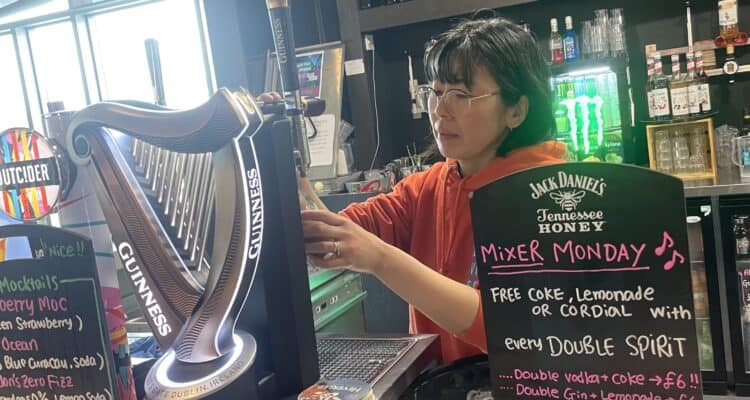
Guinness drinkers across Ireland are facing higher prices at the bar after Diageo announced a 5.2 per cent increase in the price of a pint.
This marks the second consecutive year the company has introduced a price rise, following a 4.2% increase last year. The average price of a pint has now topped £5.80, placing further pressure on consumers and publicans alike.
Tiernan McIntyre, head barman at Foxes Bar and Nightclub in Castlebar, believes spending habits are already changing.
“We see a lot of customers on a Bank Holiday Sunday night; however, the average Saturday now definitely has taken a hit on what it was in previous years,” he said.
McIntyre added that he has noticed a difference in the number of people socialising at weekends and worries about how high prices will rise in the future.
He also believes the cost of Guinness directly impacts drinking habits.
“The price of Guinness here is five euro eighty and people are happy to pay that. The only real drink we see people having a problem with the price is a shot of vodka, which is six euro. When I was younger it would have been half that, and people find it hard adjusting to the change,” he said.
National figures suggest drinking habits are shifting. The average drinker consumed 10.2 alcoholic drinks per week in 2025 — the lowest figure since data collection began in 1990, according to FT.com.
However, declining alcohol consumption among younger generations may not be solely due to rising prices, a growing focus on healthy living is also influencing behaviour.
Cormac McGrennan, a Pharmacy student from Ulster University, and Waterford gaelic footballer, believes more young people are put off by the price of alcohol, and are becoming more focused on their fitness.
“You can get a bottle of vodka for £17, and then you go into a bar and a single shot will set you back a fiver. The profit that bars make, not as much on Guinness but on vodka and other shots, is outrageous,” he said.
“A lot of young people seem to be more interested on sport and their fitness rather than drinking these days,” added McGrennan.
A recent survey by Sky News found that 39% of 18–24-year-olds do not drink alcohol. Many in this age group are more focused on health and wellbeing compared to the stereotypical young person a decade ago.
Price differences across Northern Ireland also highlight the issue. One of the cheapest pint of Guinness on the island can be found for £4.00 at the National Foresters Club in Belfast – Meanwhile, during the Open Golf Championship, a pint in the Harbour Bar in Portrush reached £8, making it one of the most expensive in the region.
A spokesperson for Guinness defended the increase.
“Here at Guinness we are committed to keeping the price as cheap as possible; however, it is not possible to keep the price the same when everything else increases. Wages, electricity, and heating have all increased, so why should Guinness not? We believe it is kept at a reasonable price given the world climate,” the spokesperson said.
As prices continue to rise, pubs across Ireland are facing ongoing challenges. According to RTE, 2,100 pubs have closed in Ireland over the last 20 years, with many consumers choosing to drink at home instead.
Changing social habits are also reshaping the hospitality landscape. Traditional pub culture is no longer the primary form of socialising for many young people, who are increasingly turning to alternative pastimes such as reading or going for a coffee.
The decline of pubs has created opportunities elsewhere in the market, particularly for coffee shops.
Starbucks employee, Cathal O’Connell, believes attitudes have shifted significantly.
“A lot of the socialising I do now would be going for coffee. I try and avoid alcohol as I find it has a negative effect on people generally,” he said.
As rising costs, health consciousness, and changing lifestyles continue to influence consumer behaviour, the hospitality sector faces growing uncertainty about the future of Ireland’s traditional pub culture.

